MindFEM
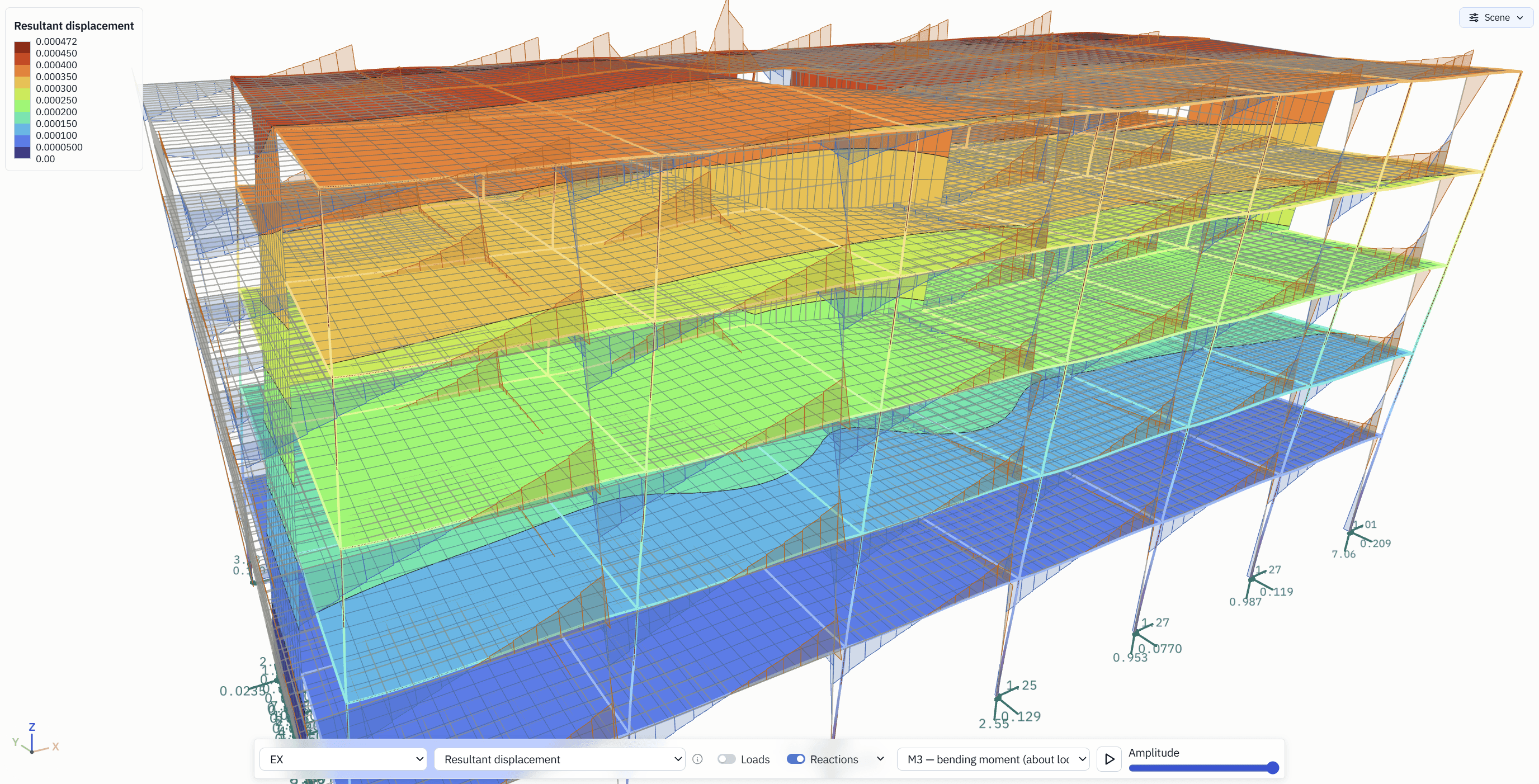
MindFEM is the cloud-based 3D finite element analysis engine that performs the structural analyses in StructuralMind.
Solved in the cloud
Nothing to install
Analyses are started from the browser and the results are reviewed in the browser. No licence key is needed, and MindFEM can be reached from a Mac, a tablet or a phone too.
Not tied to the page
The solution runs on the server, so your computer stays free while it computes. Close the tab and the result is ready when you come back.
Runs to completion
If a server stops during a solution, the analysis is finished on another server automatically.
Everyone on the current version
Fixes and new features of the engine reach everyone at once, with no upgrade to install.
Capabilities and the problems they solve
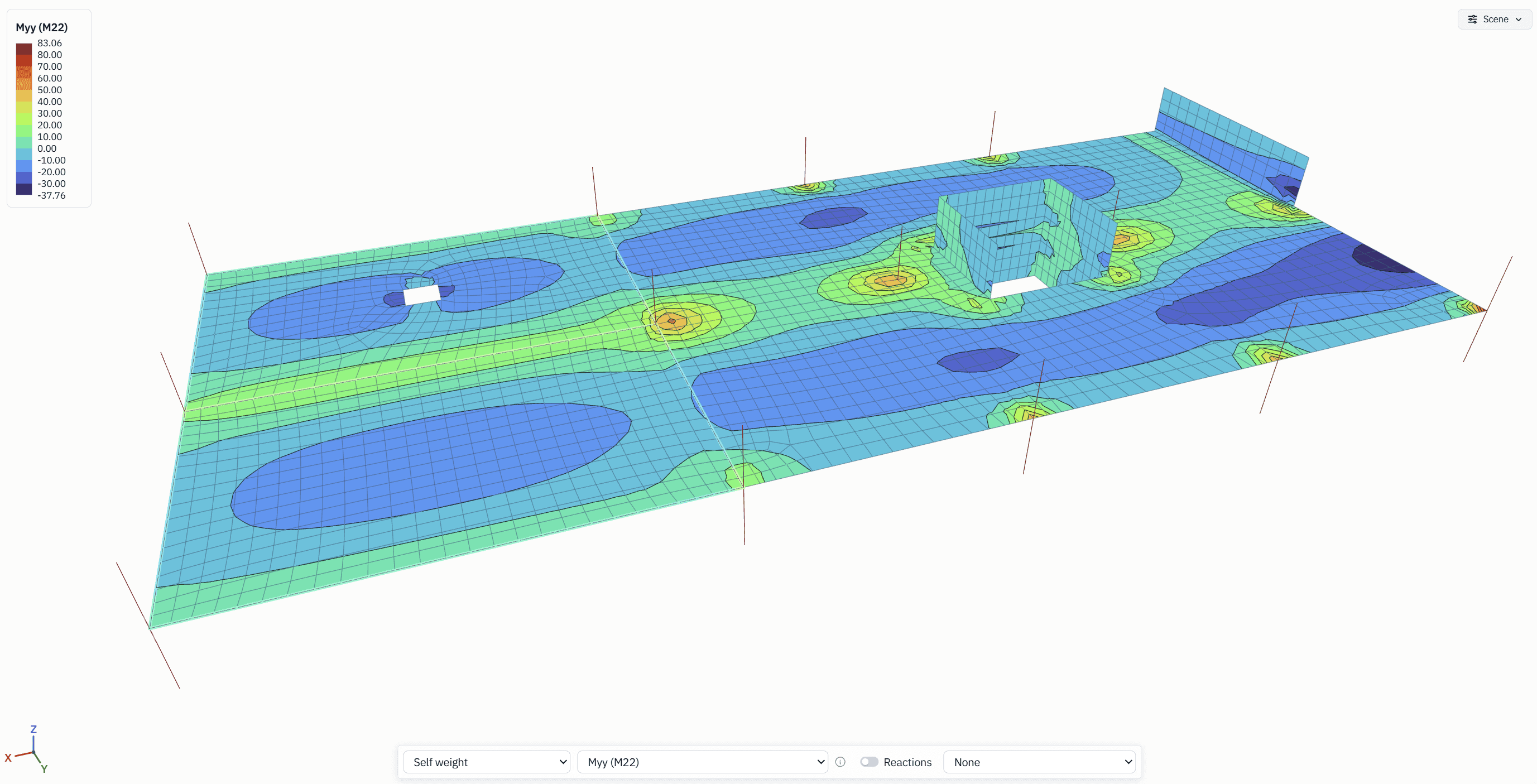
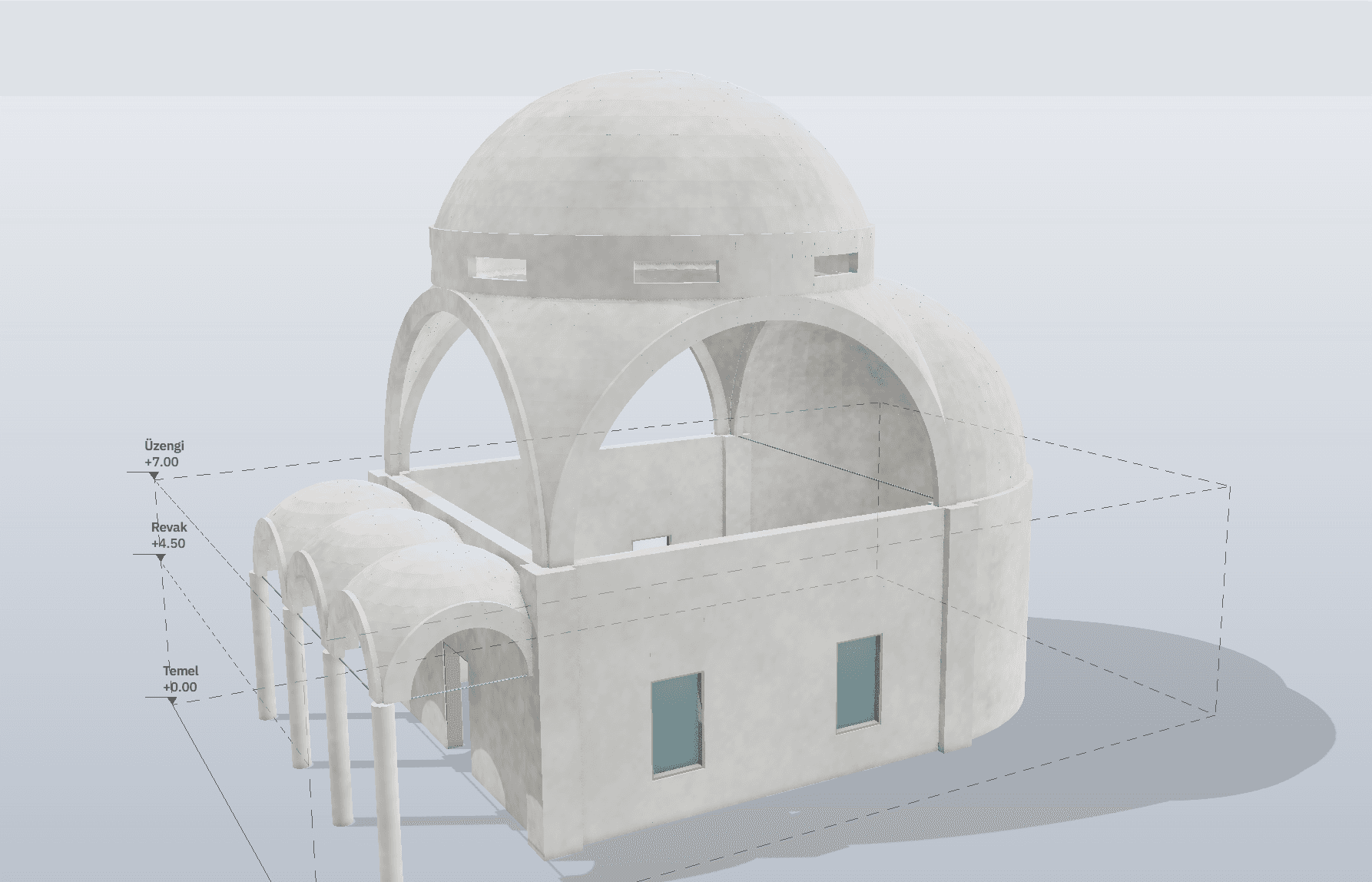
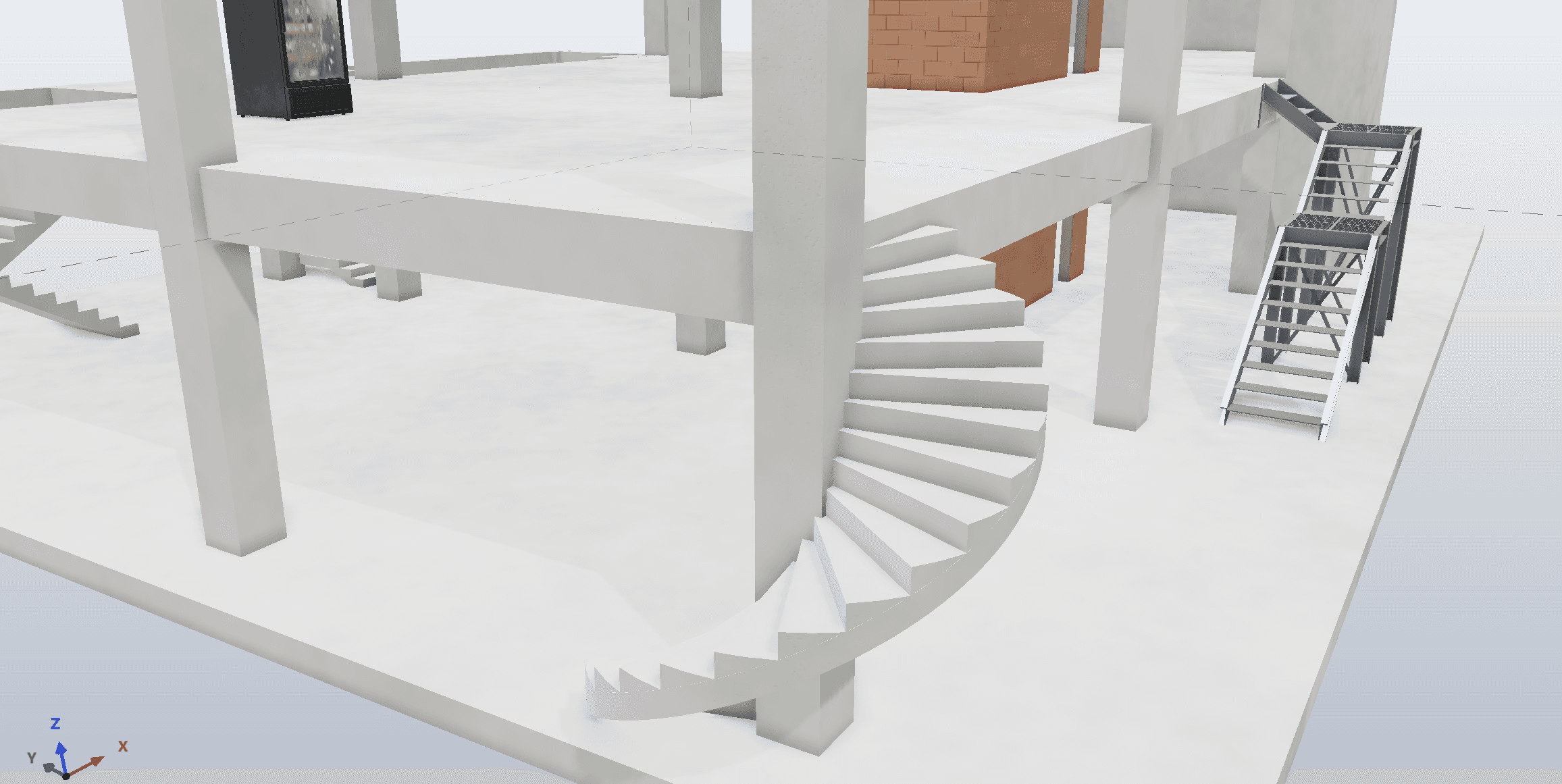
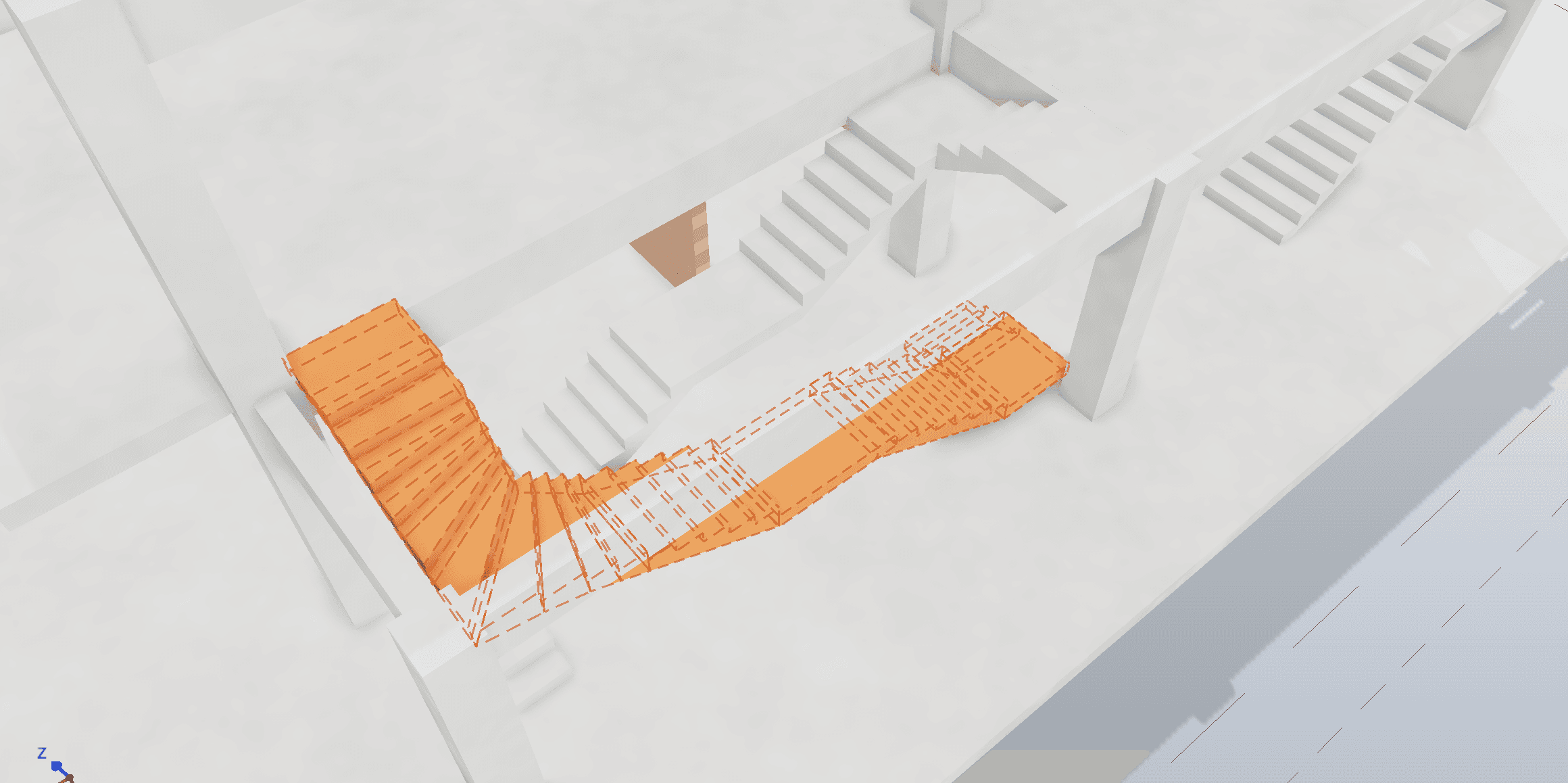
Shell elements
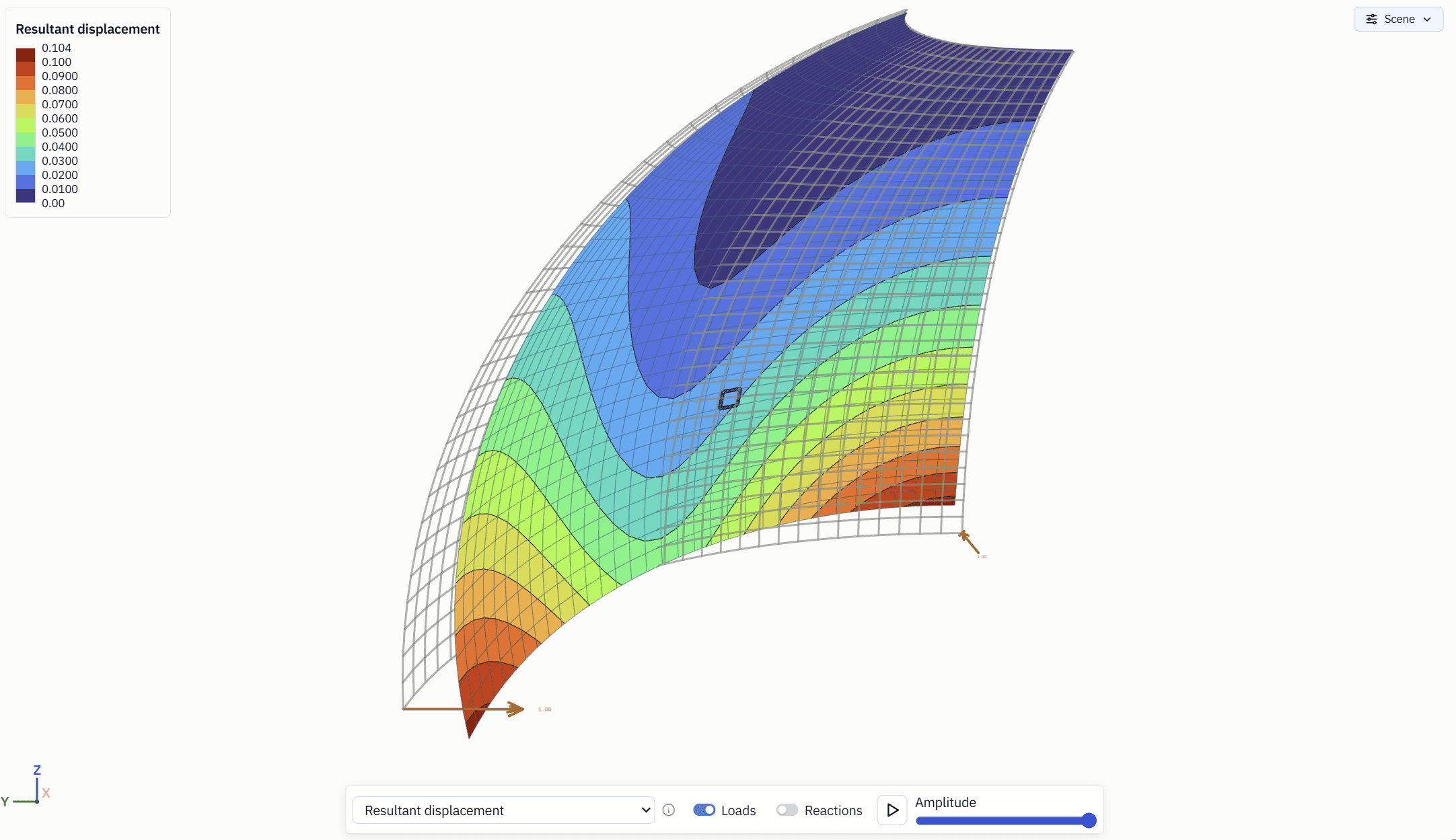
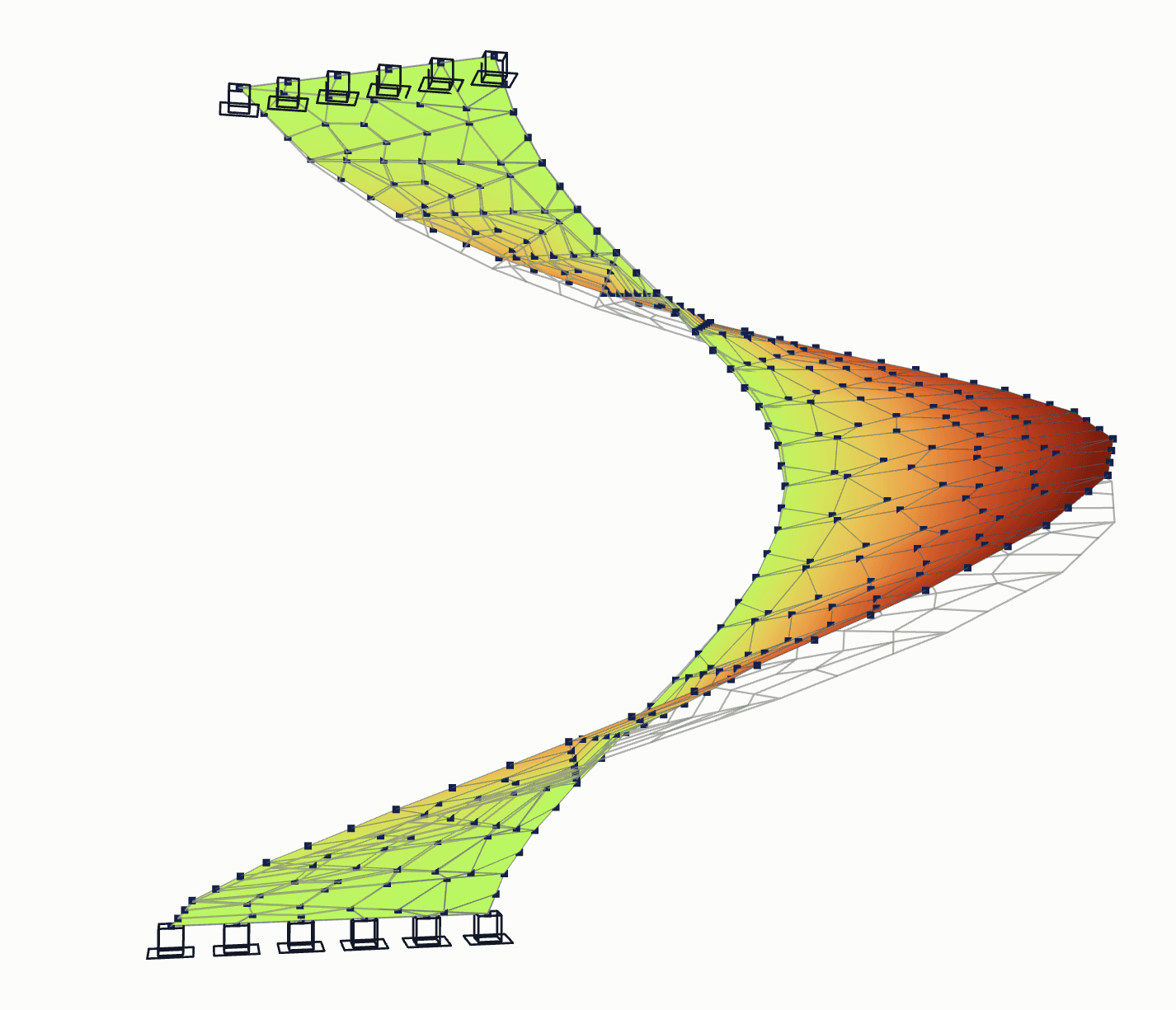
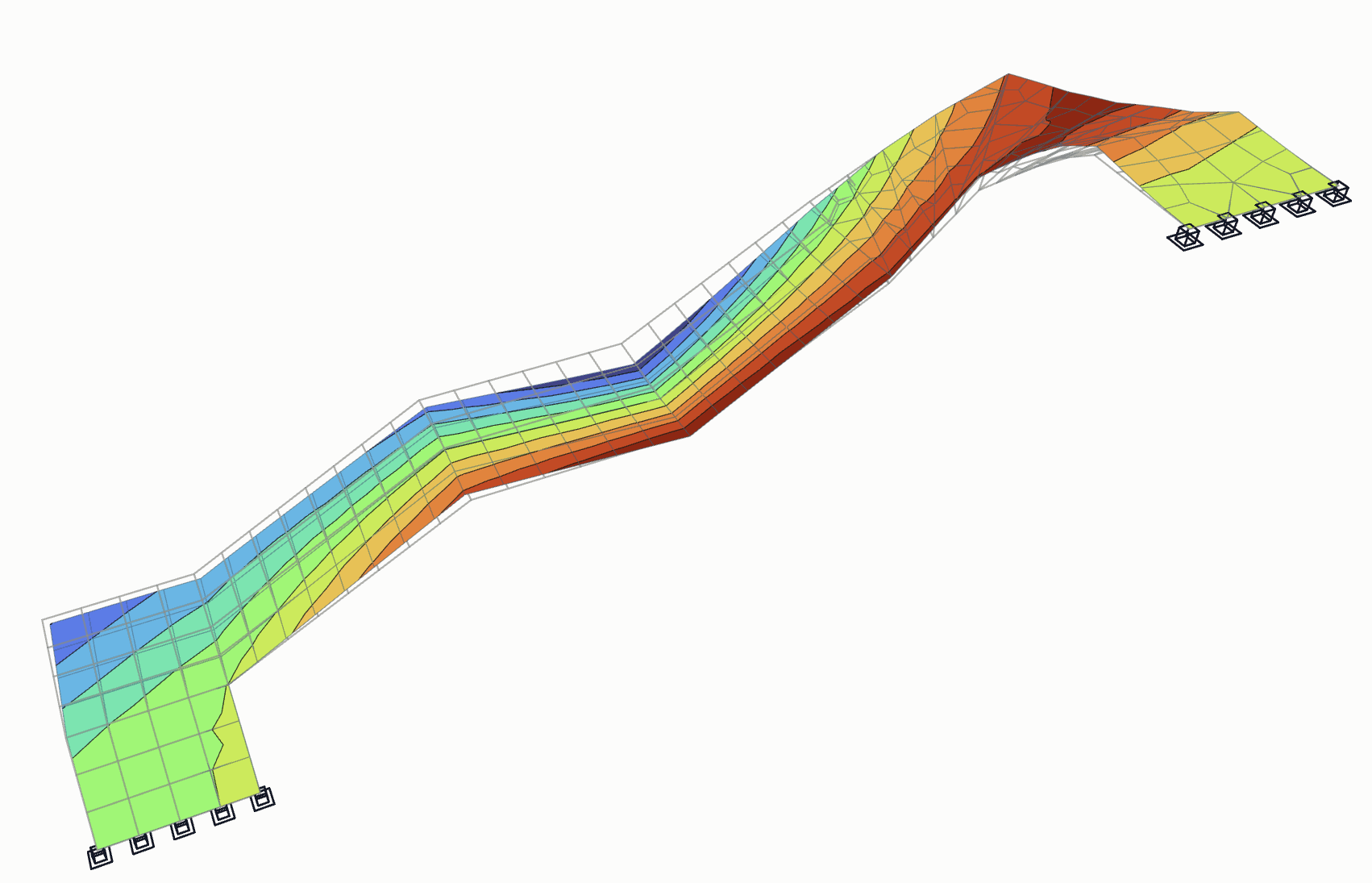
Quadrilateral and triangular shell elements are used together in one mesh. Flat, curved and doubly curved surfaces are modelled with them.
- Domes and cylindrical shells
- Spiral stairs
- Walls and slabs
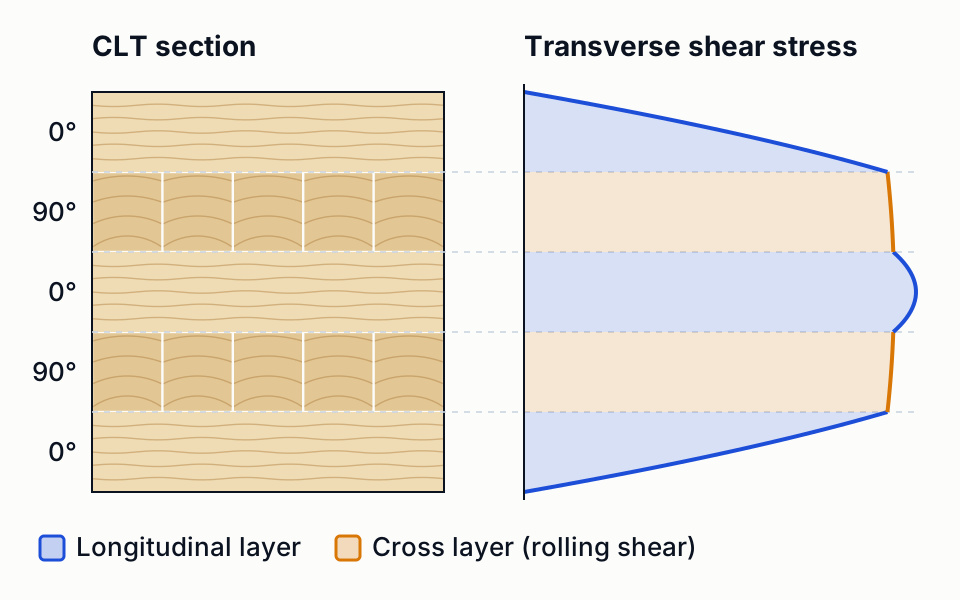
Layered and orthotropic shells
The section is built from the layup of the layers. The stress of every layer, including rolling shear in the cross layers, is calculated separately.
- CLT floors
- Steel-concrete composite plates
- Orthotropic decks
One-way elements
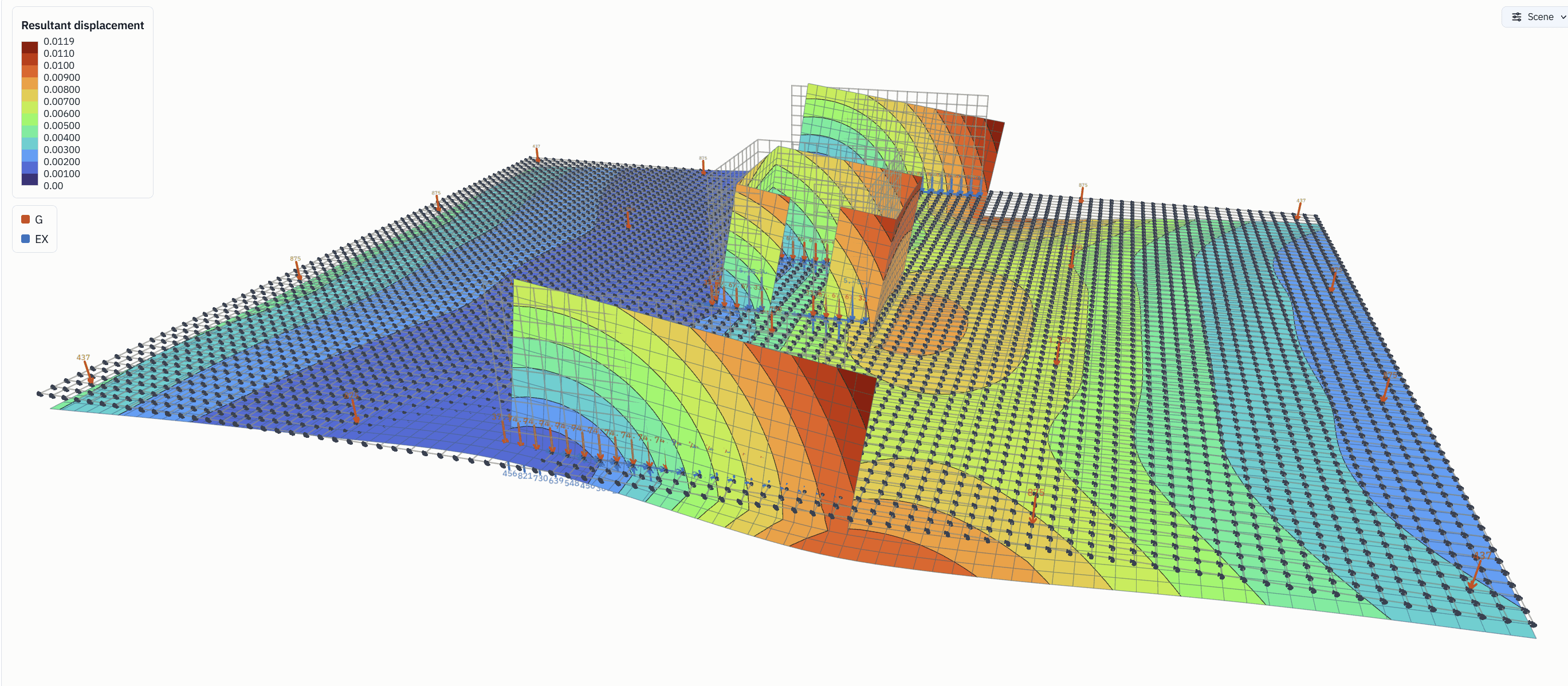
Compression-only and tension-only springs and bars, and gap elements, can be defined. The solution iterates until it is settled which elements are active.
- Rafts lifting off the soil
- Tension-only bracing and hangers
- Seismic shear keys
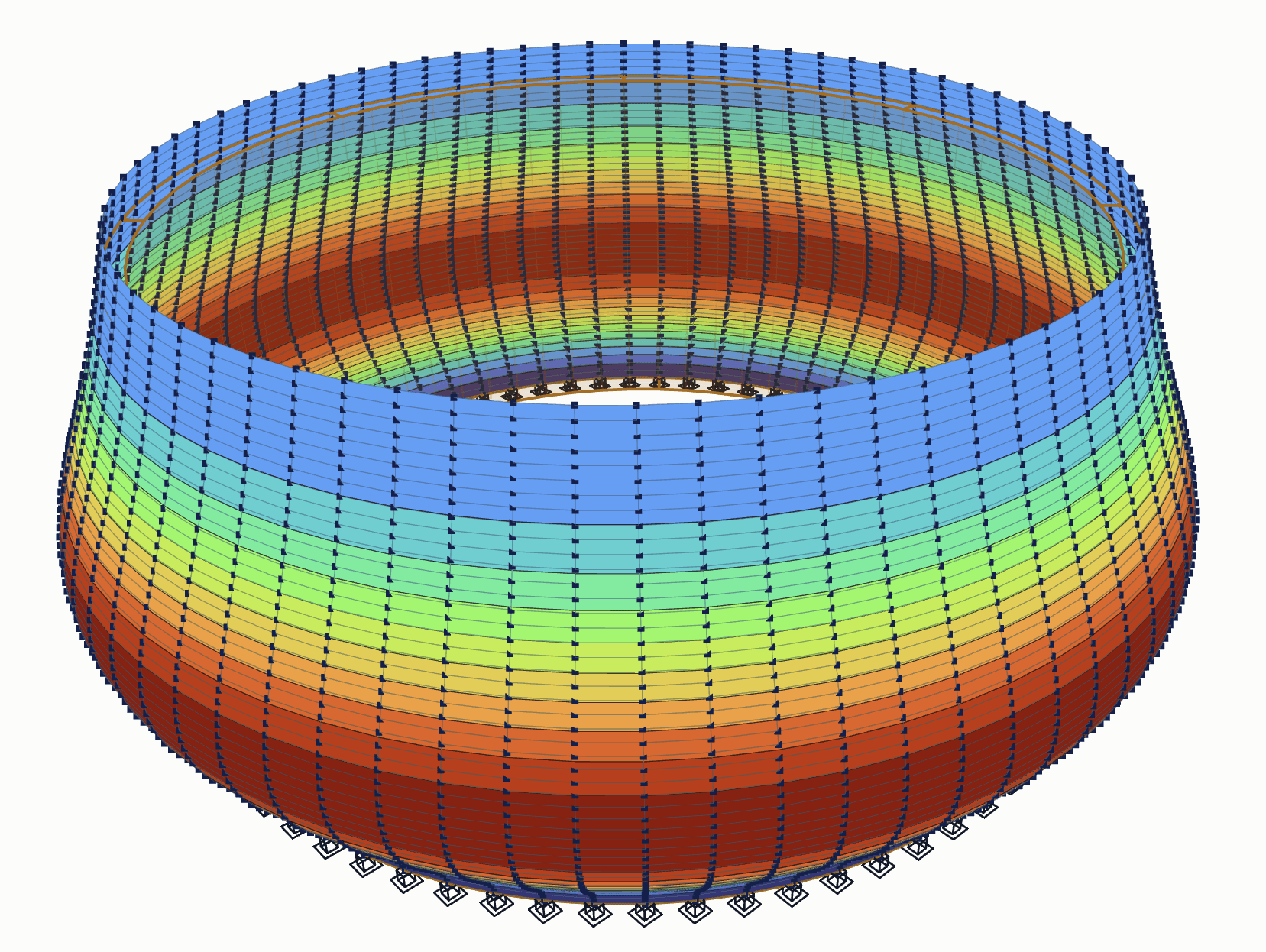
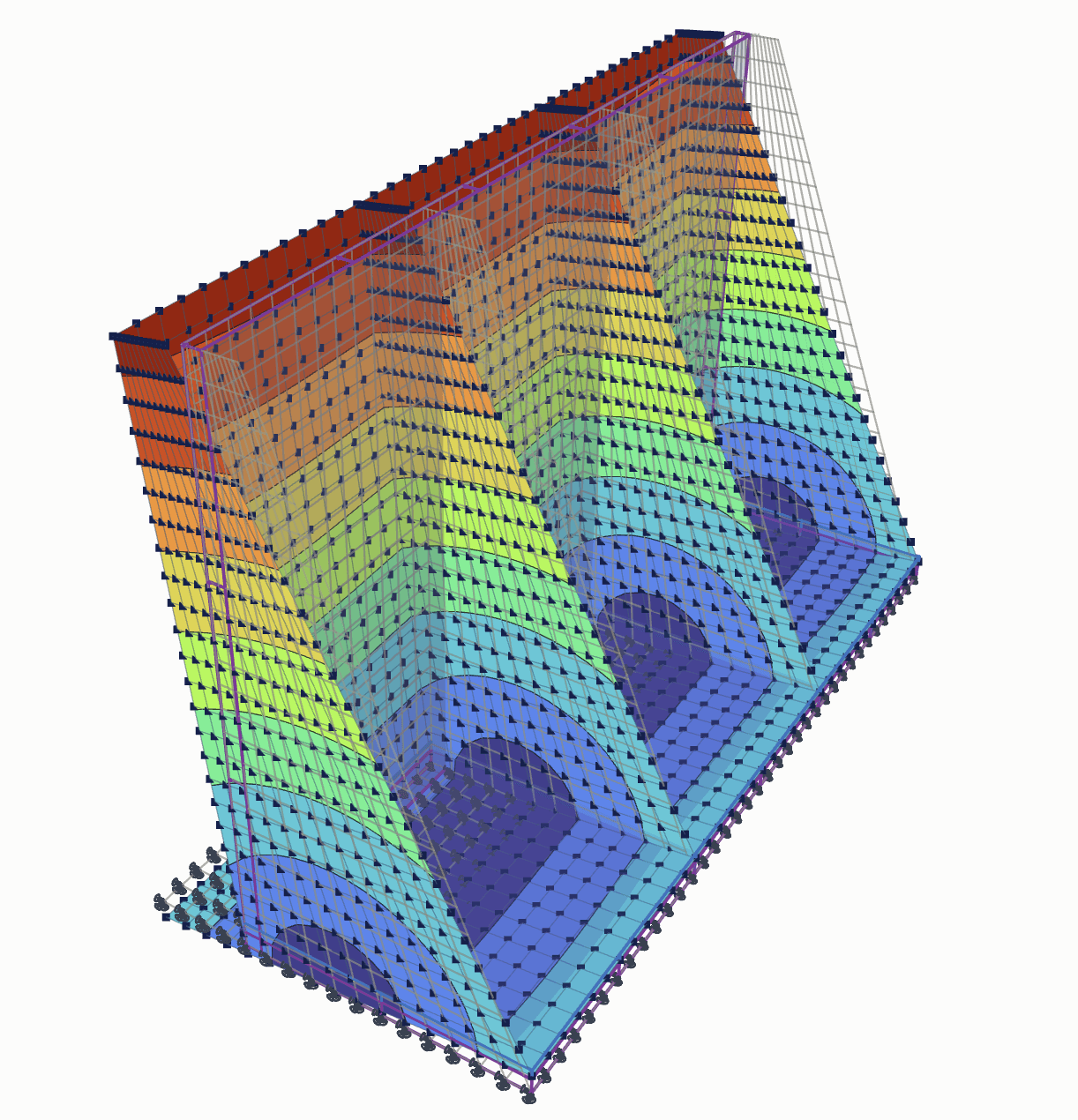
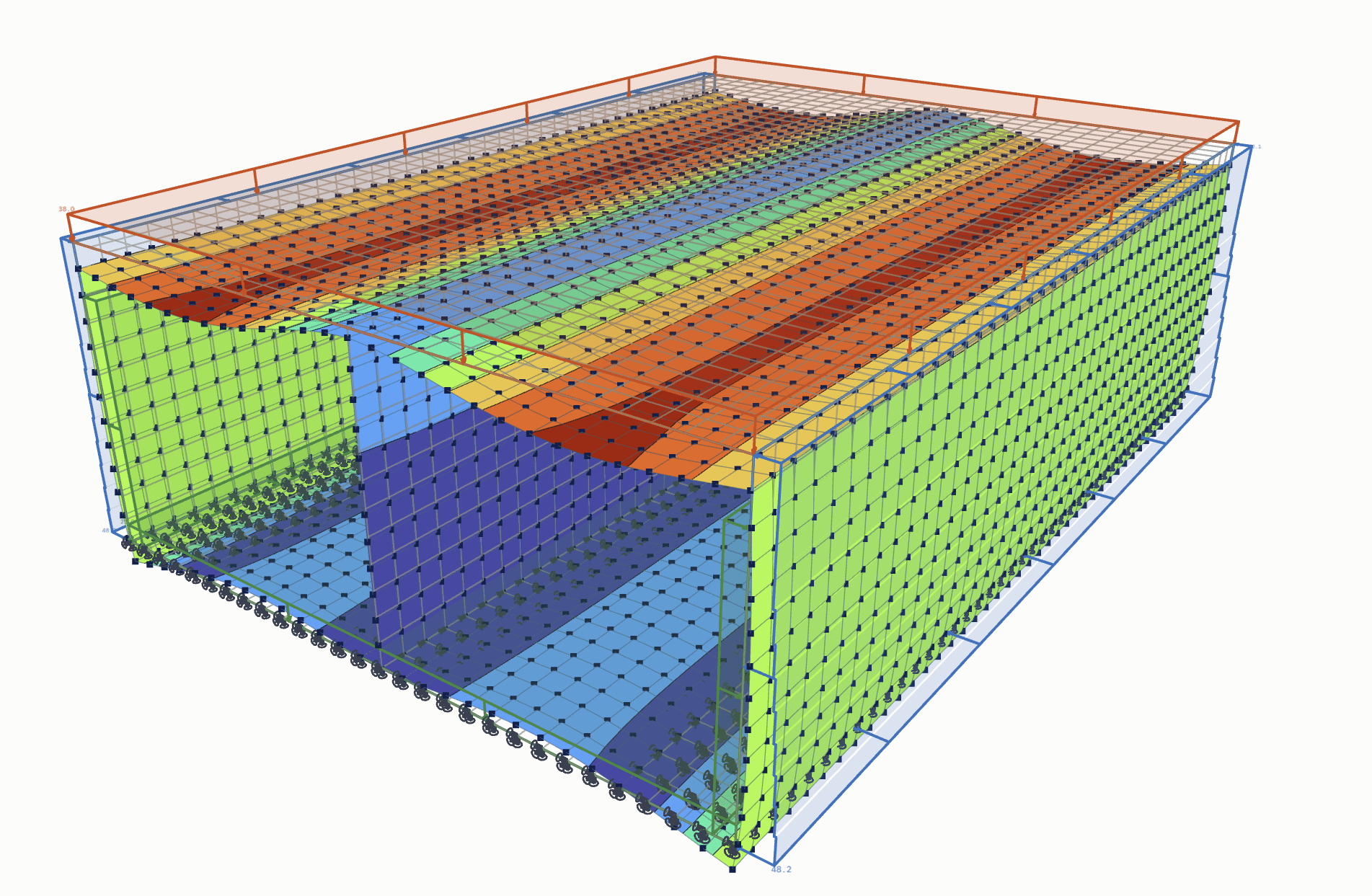
Position-dependent surface loads
The pressure on a shell surface is defined as a function of position. The mesh does not have to follow the water level or the soil layer boundary where the pressure changes slope.
- Silos
- Retaining walls
- Culverts
- Water tanks
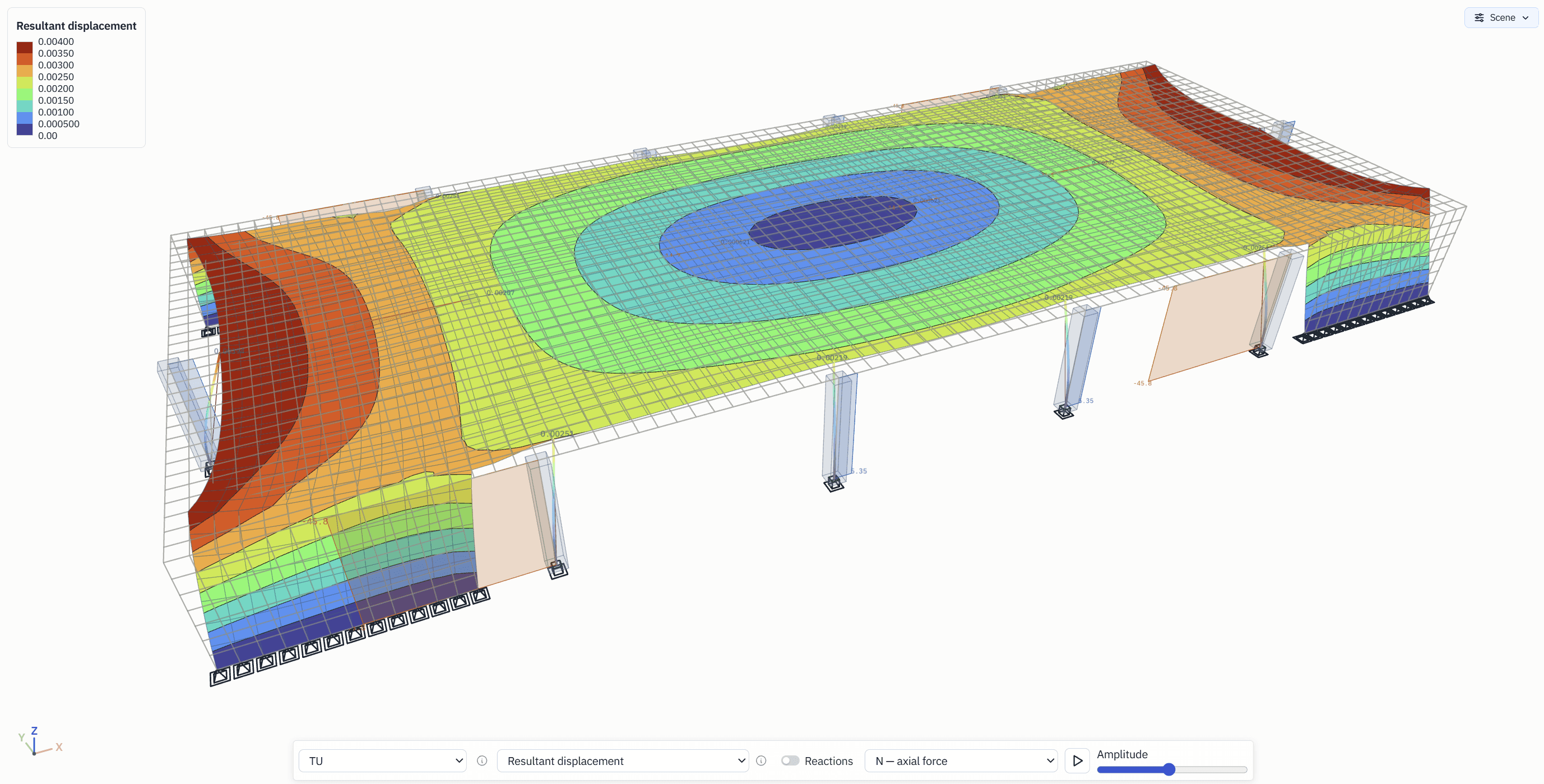
Temperature and shrinkage
Uniform temperature change and a temperature difference through the thickness are applied to frame and shell elements. Shrinkage can be defined as an initial strain.
- Open car park slabs
- Shrinkage
Moving loads
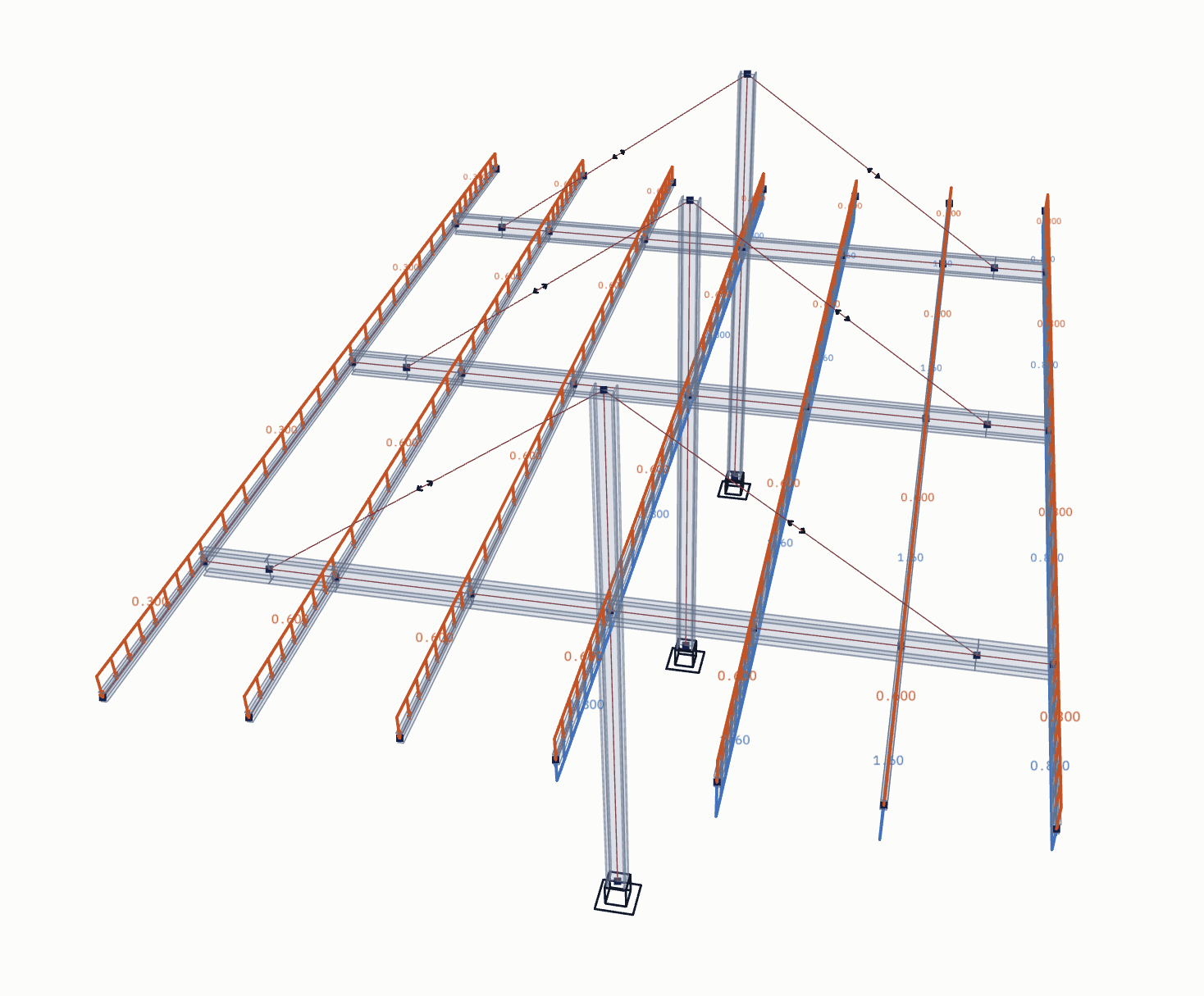
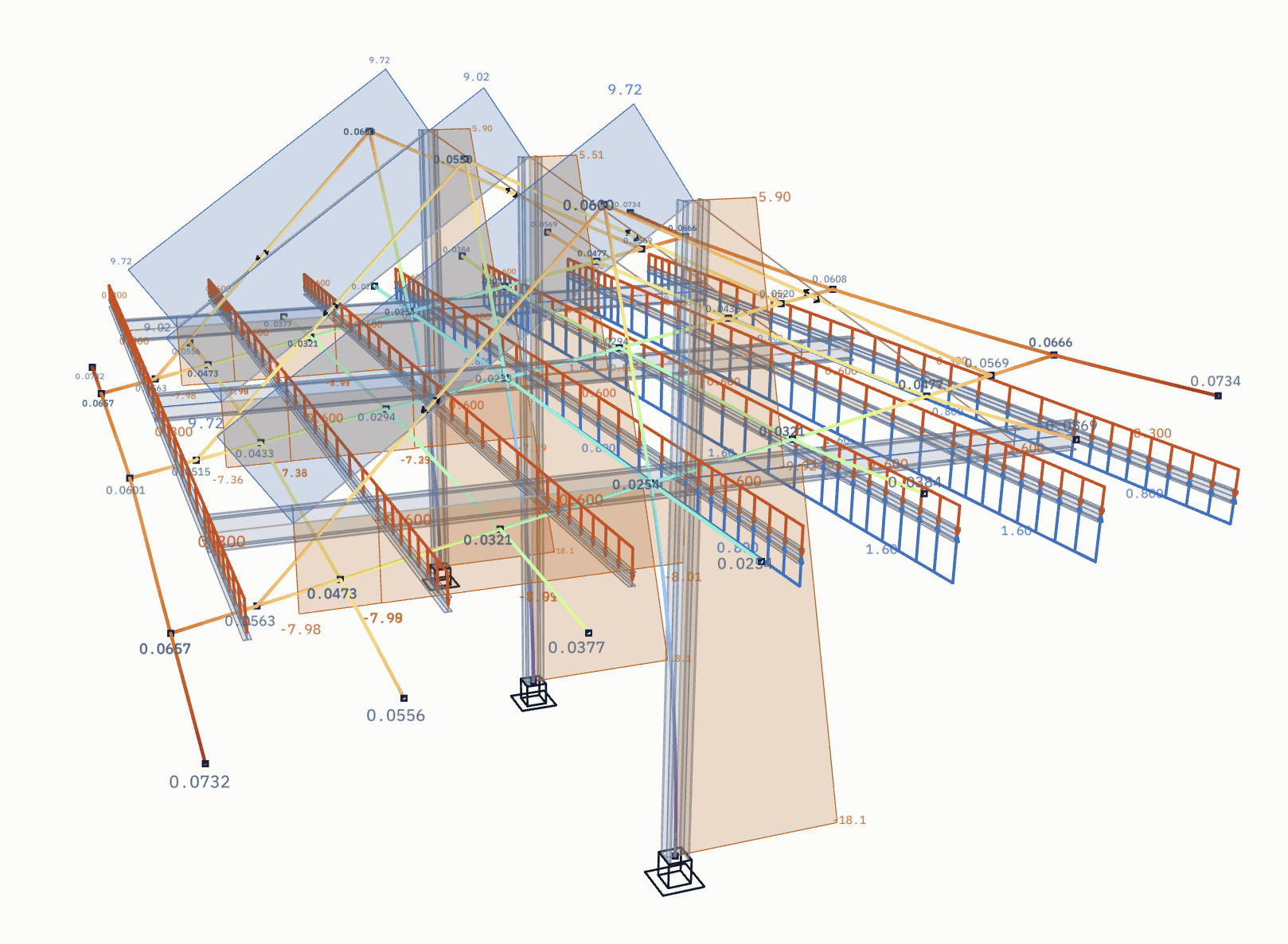
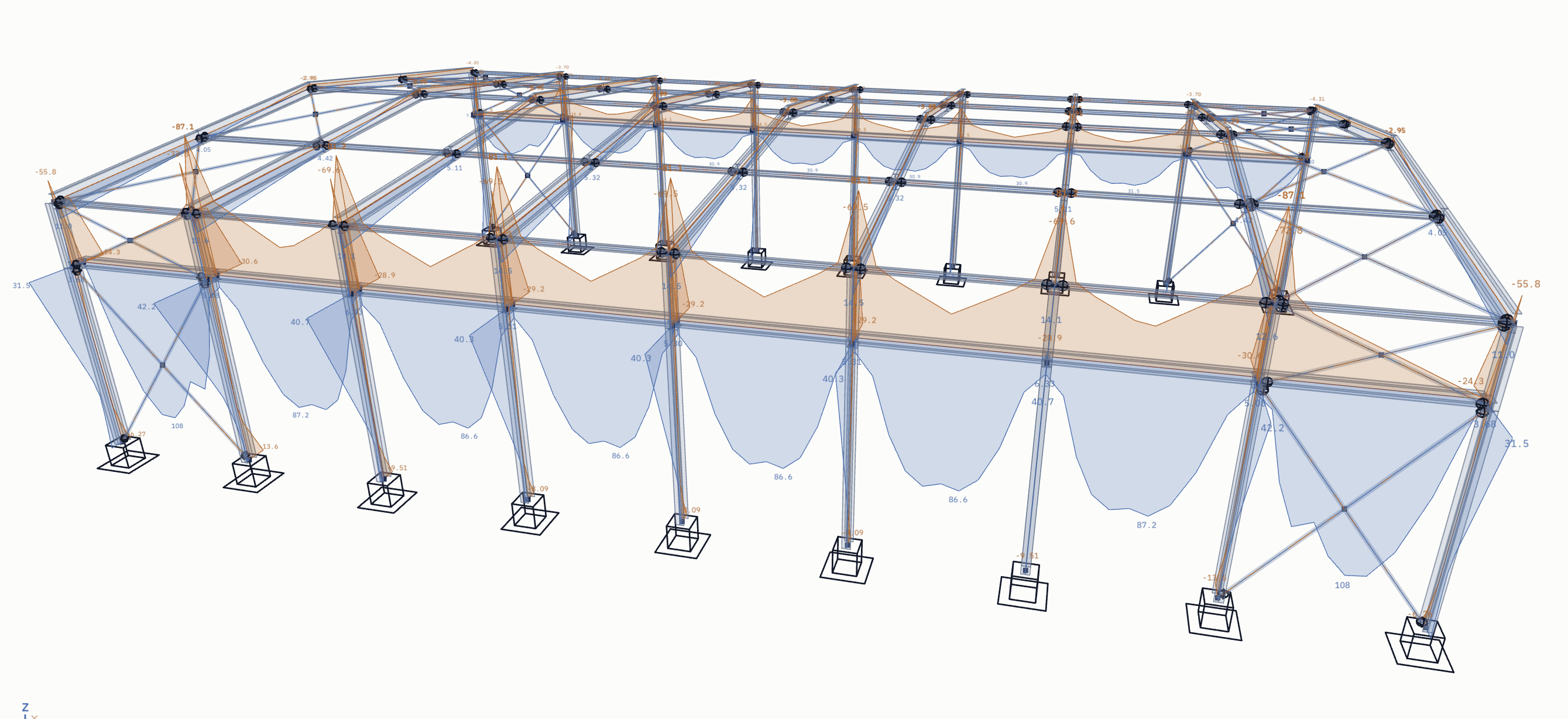
Load trains such as cranes and vehicles are moved along a route. The envelope of every position is obtained together with the position that governs it.
- Crane runway girders
- Vehicle loads
Section forces
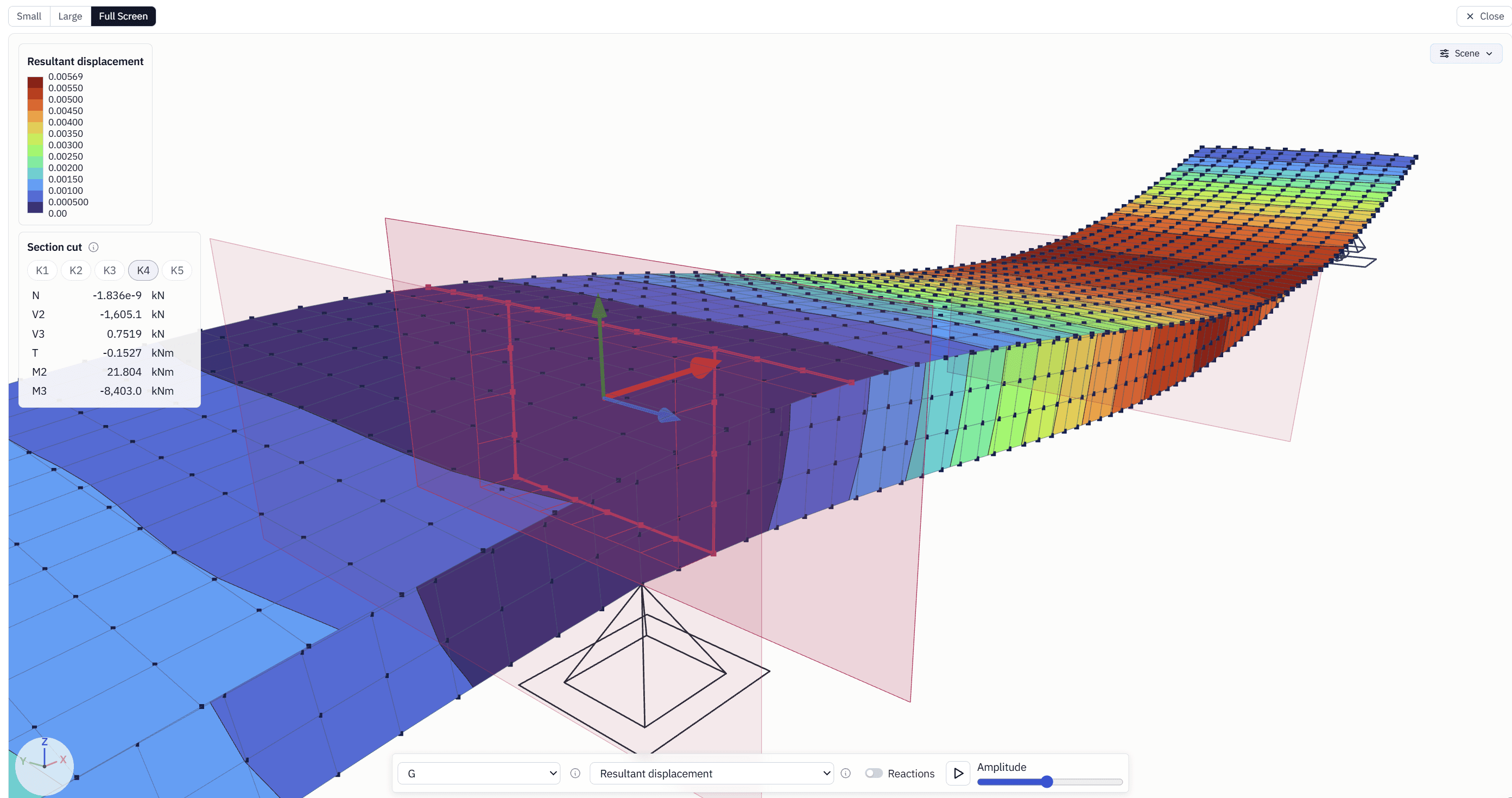
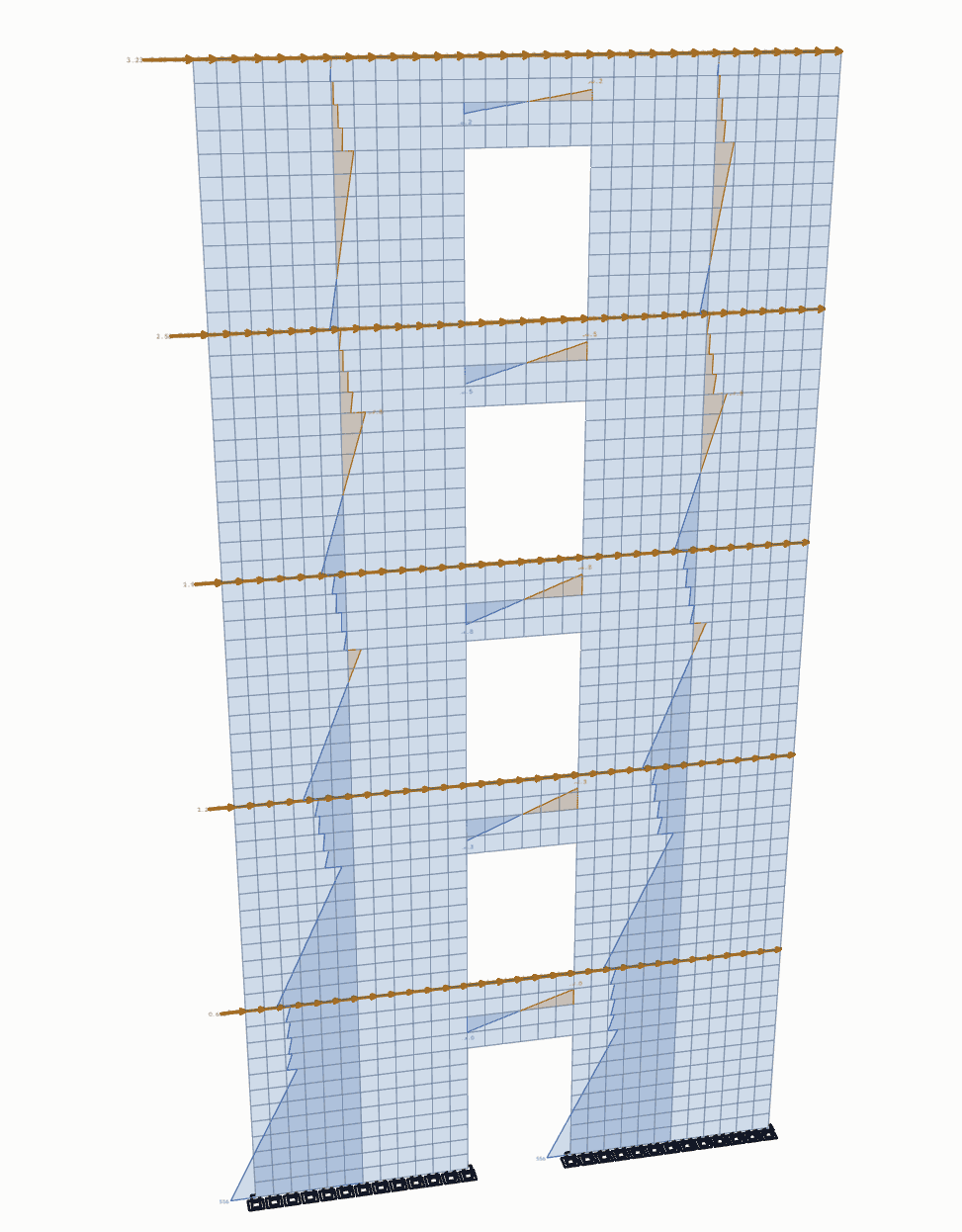
The forces of shell elements are summed across a section into axial force, shear force, bending moment and torsion. The section is defined by a plane, a wall pier (PIER), a coupling beam (SPANDREL) or a design strip.
- Box girder bridges
- Coupled shear walls
- Slab design strips
Vibration modes
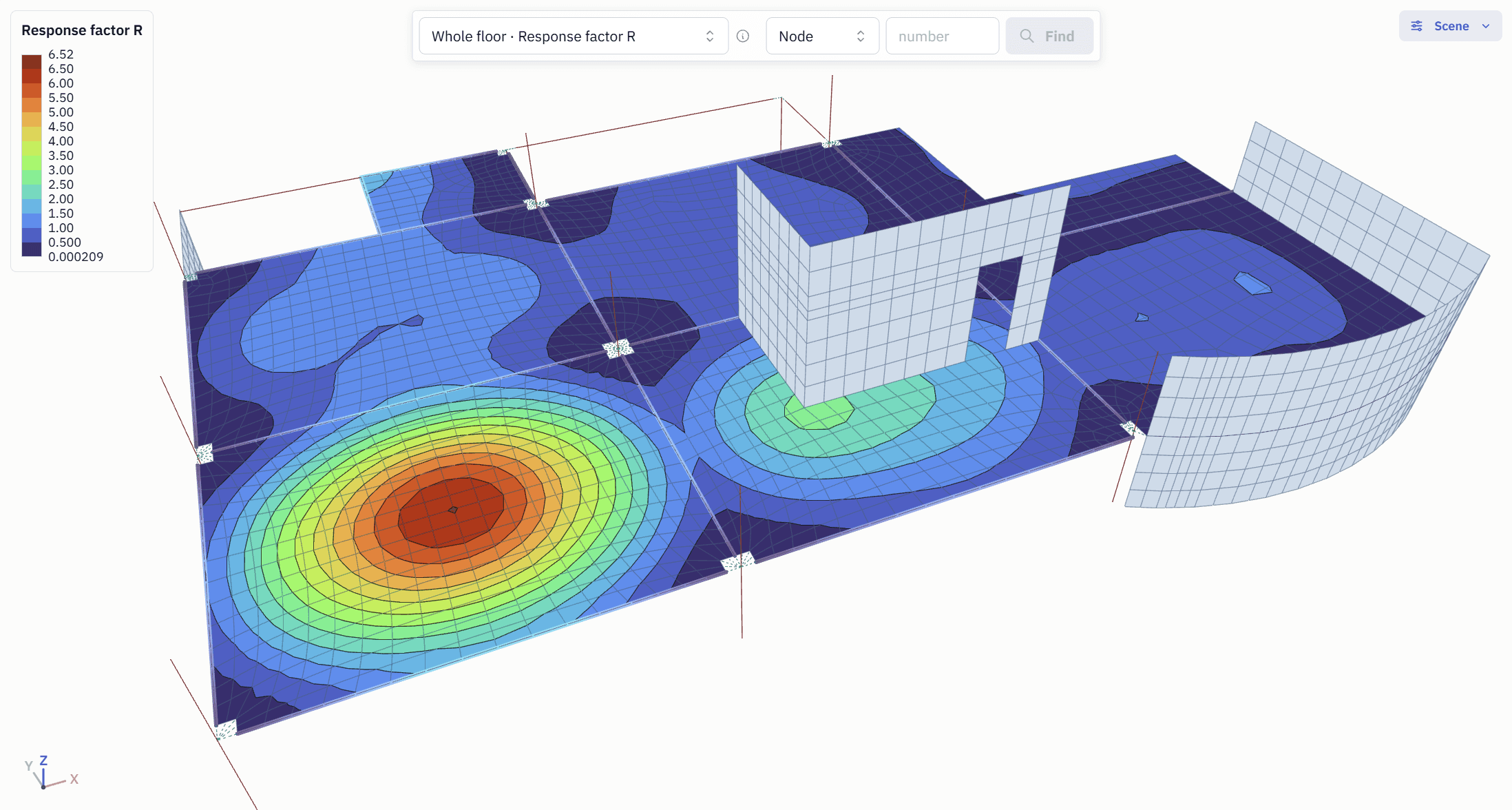
Modes are found with the consistent mass matrix, up to a requested number of modes or a frequency limit.
- Floor vibration
- Stair vibration
- Machine vibration
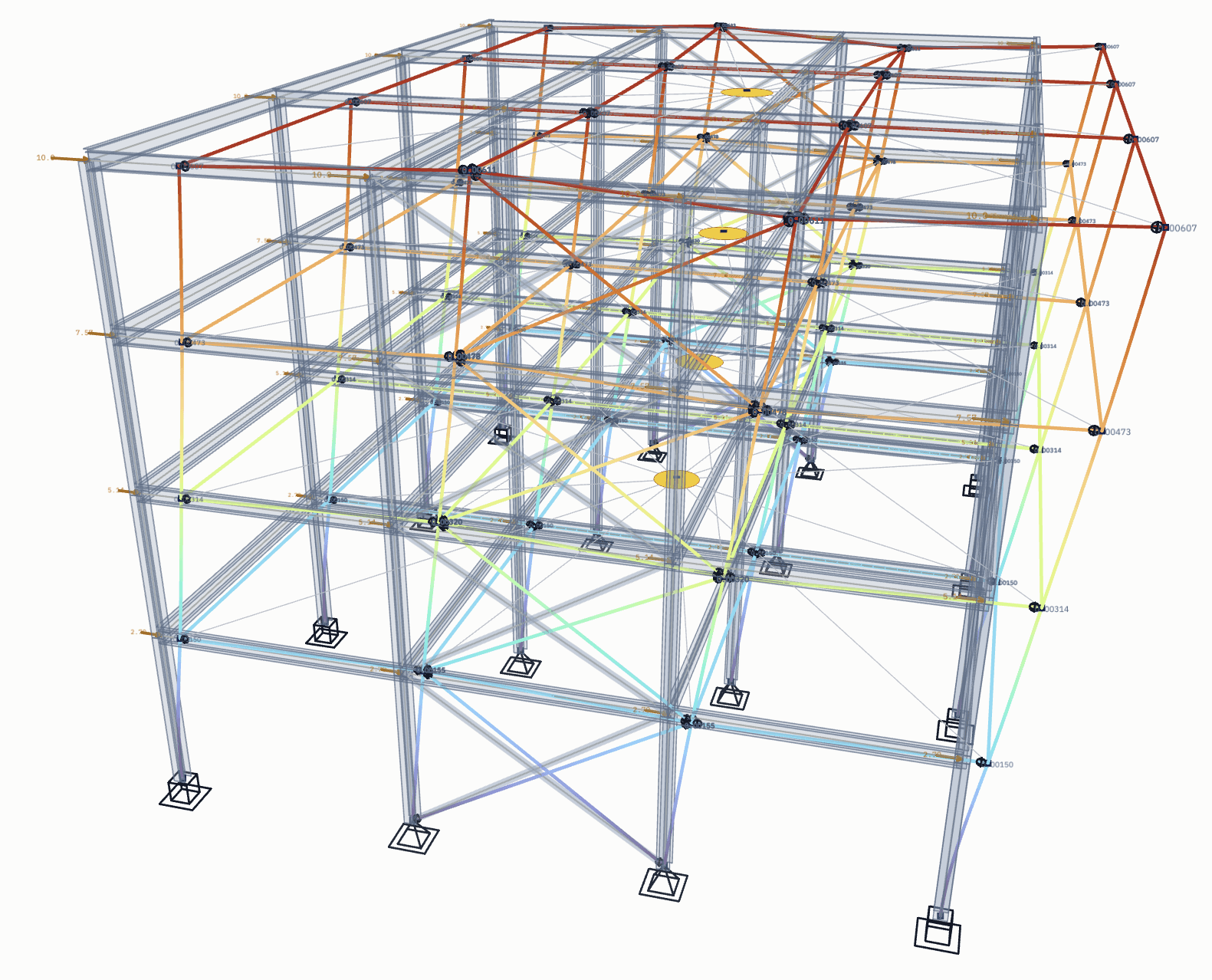
Buckling and P-Delta
Buckling load factors and mode shapes are found from the elastic and geometric stiffness. Second-order effects are included through P-Delta analysis.
- Steel frames
- Shell buckling
Element types and formulations
| Element | Formulation |
|---|---|
| Frame element | Timoshenko beam, consistent mass |
| Tapered element | Flexibility formulation |
| Quadrilateral shell | MITC4, Allman drilling rotation |
| Triangular shell | MITC3+, Allman drilling rotation |
| Layered and orthotropic shell | Laminate theory, rolling shear |
| Axial bar | Linear, tension-only or compression-only |
| Nodal spring | Linear, compression-only or tension-only |
| Constraints and connections | Body Constraint, Rigid Diaphragm, rigid end zones, semi-rigid connections, end releases |
Analysis types and solution methods
| Analysis | Method |
|---|---|
| Linear static | Sparse direct solver |
| Static with one-way elements | Newton iteration |
| Second order (P-Delta) | Constant geometric stiffness |
| Linear buckling | Lanczos eigensolution |
| Vibration modes | Shift-invert Lanczos, to a mode count or a frequency limit |
| Moving load | Any number of axles or wheels, braking and lateral forces, several cranes on one runway, partial lane load |
Detailed verification and comparisons
Closed-form and published solutions
Beam, plate, shell and stability solutions from the classical literature.
Standard benchmarks
The NAFEMS tests and the MacNeal-Harder problems used to assess finite elements.
Comparison with other programs
Full-scale structural models are also built in ETABS and SAP2000 and the results are compared.
Start calculating in minutes.
Sign up, pick a calculation, and produce your first auditable report.