Floor and stair vibration analysis
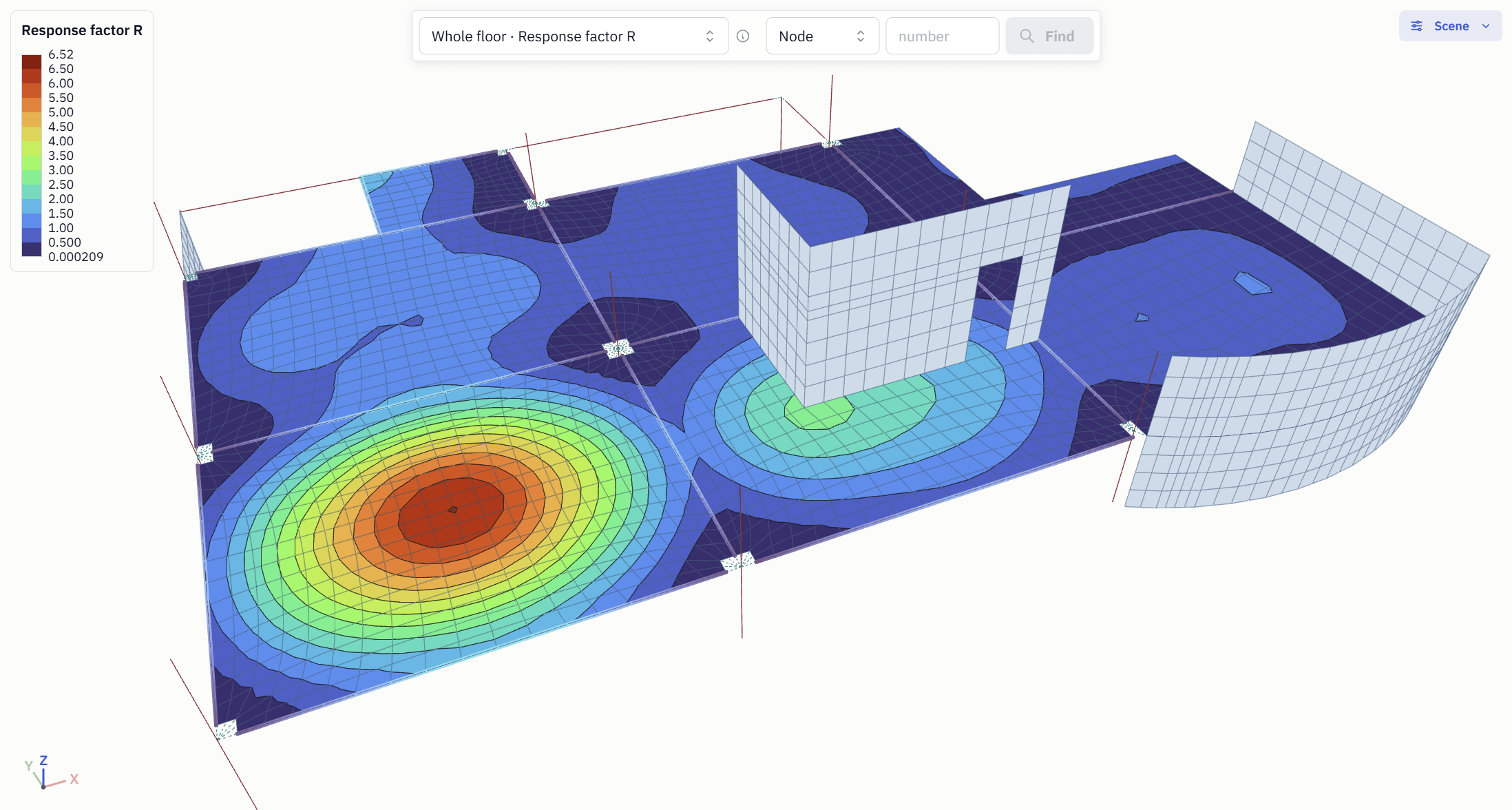
Compute the vibration from walking, running, rhythmic activity and rotating machines on floors and stairs, with a finite element model built from the storeys in the Model Editor. The analysis follows SCI P354, CCIP-016 or AISC DG11, and the result is mapped over every point of the floor.
Three guides
SCI P354, CCIP-016 and AISC DG11 are chosen per calculation. The guide sets the whole method, from the modelling rules to the result quantity.
Criteria by area
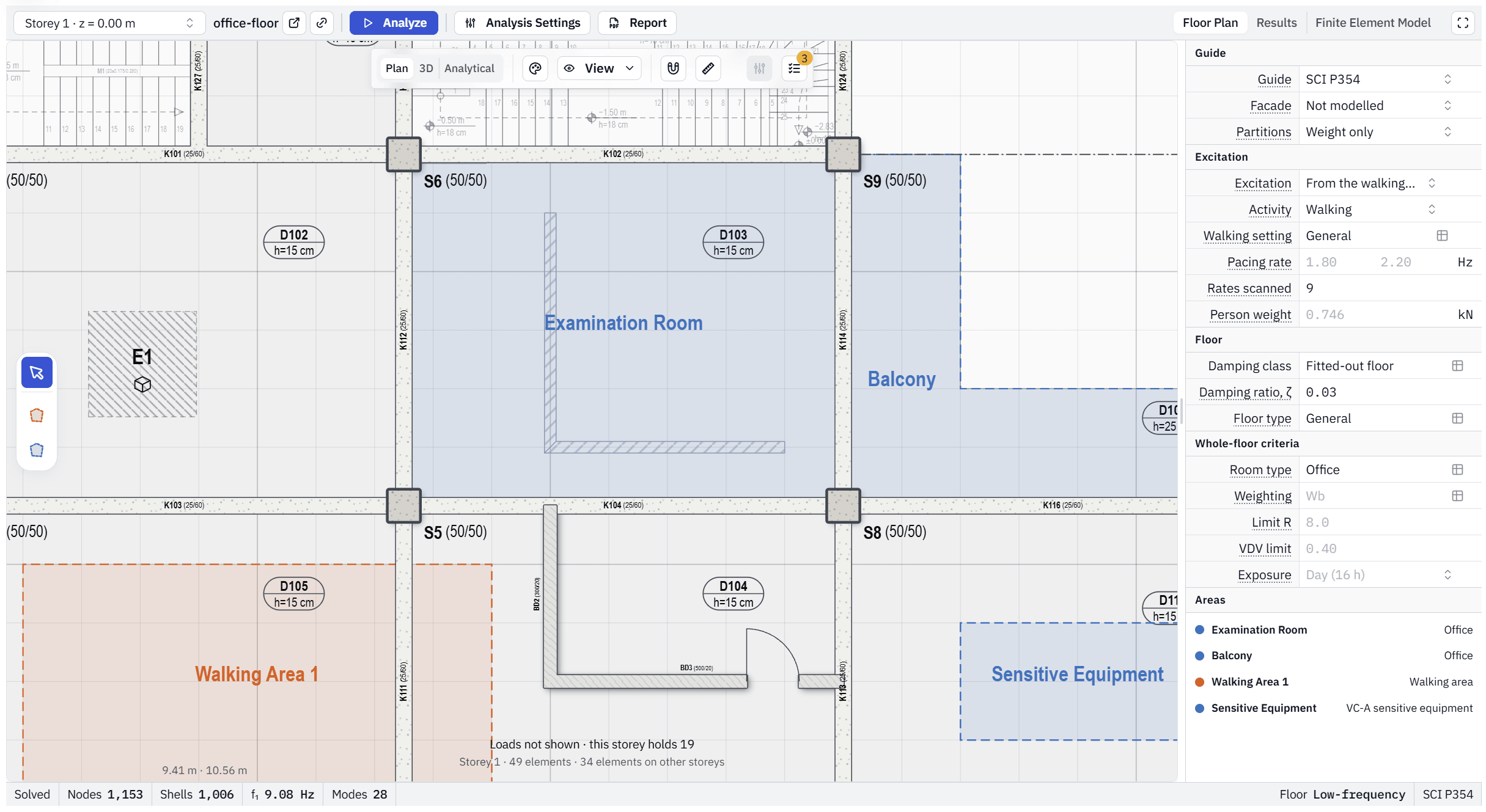
The whole floor and every area you draw are assessed separately. Each area is compared with the limit of its own room type, and its worst point is reported.
People and machines
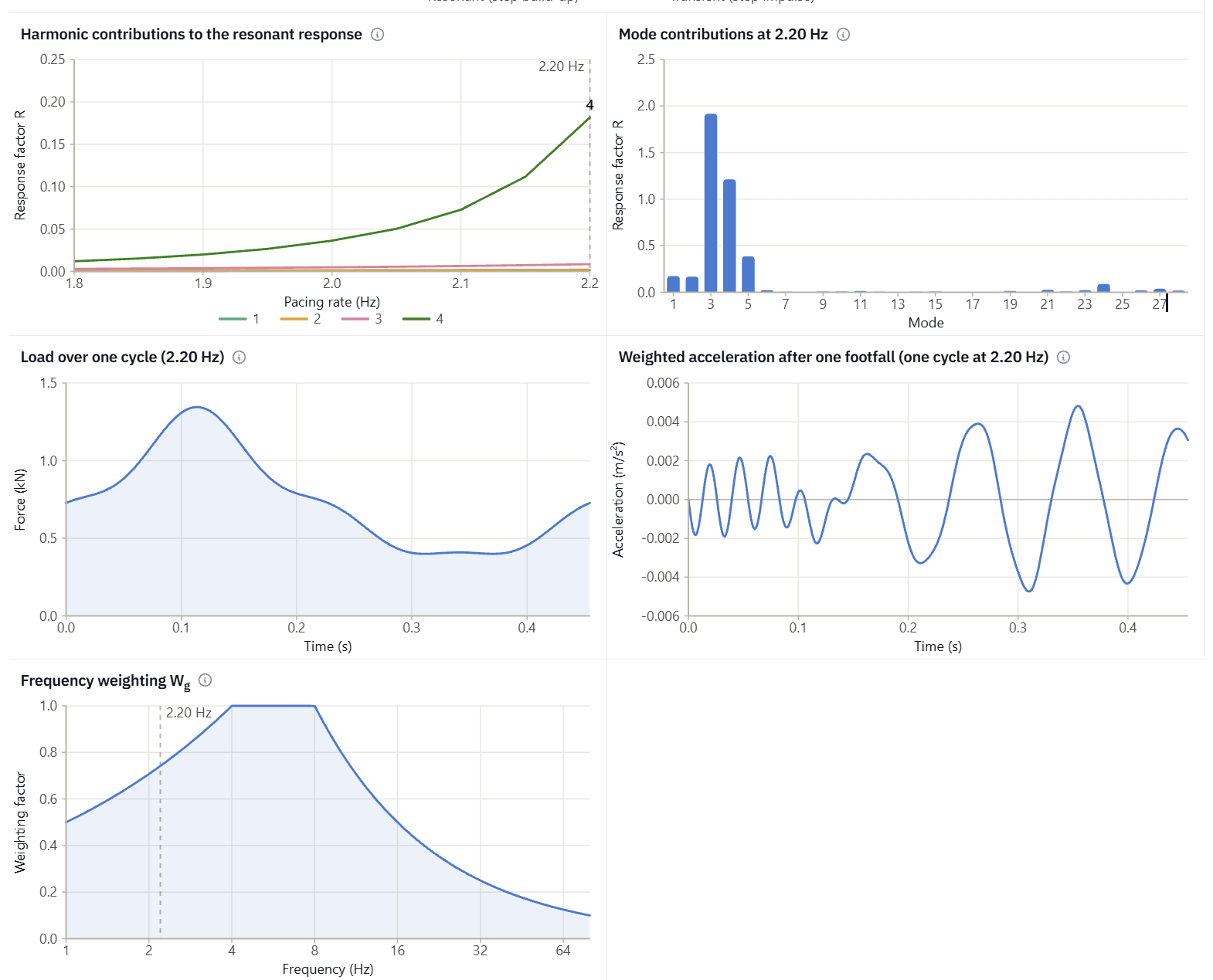
Walking, running, rhythmic activity and rotating machines can be computed on floors. The activities available depend on the guide.
From model to analysis
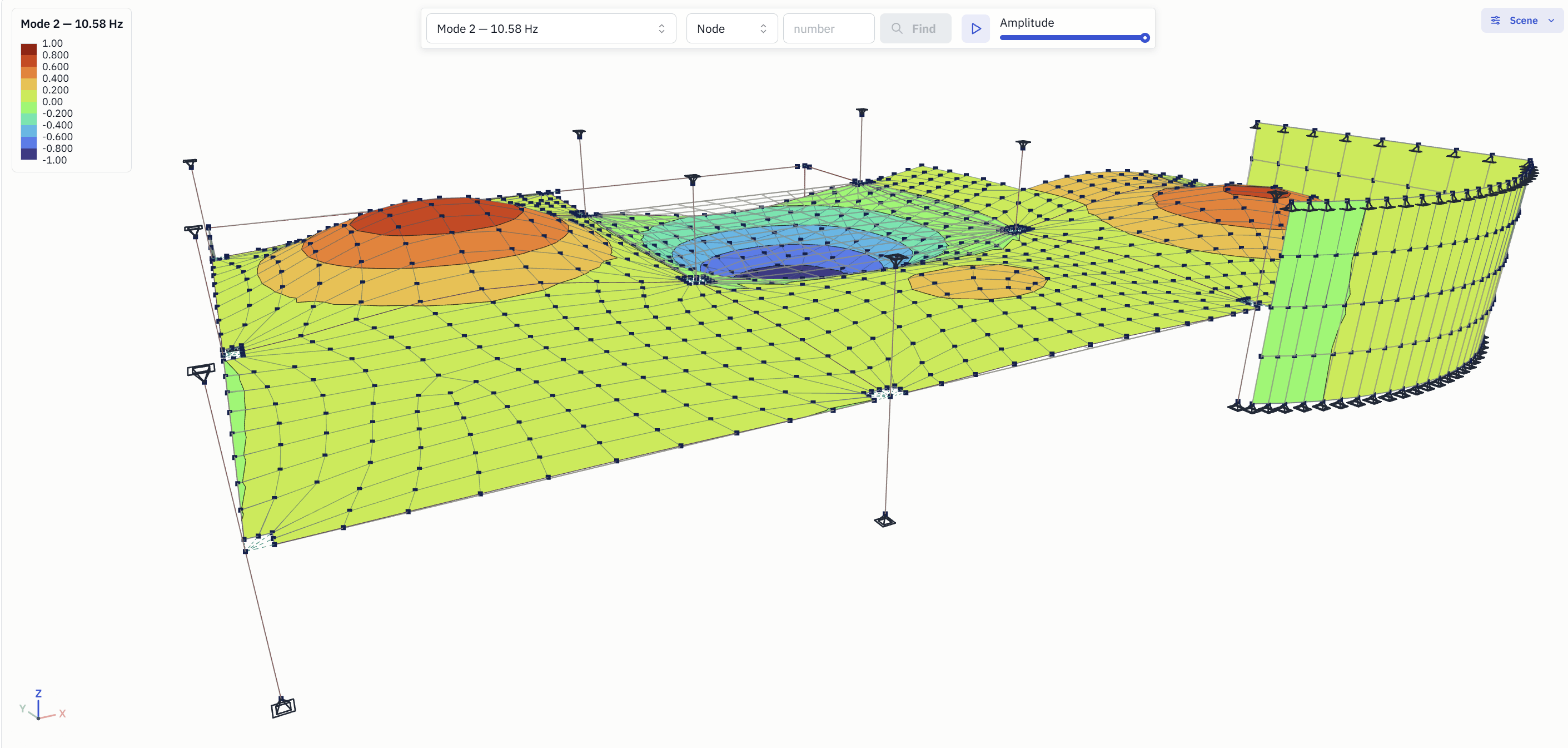
Pick a storey or a stair from your model. Floors are modelled with shells and beams with frame elements, and columns and walls are modelled by the guide's rules.
Stair vibration
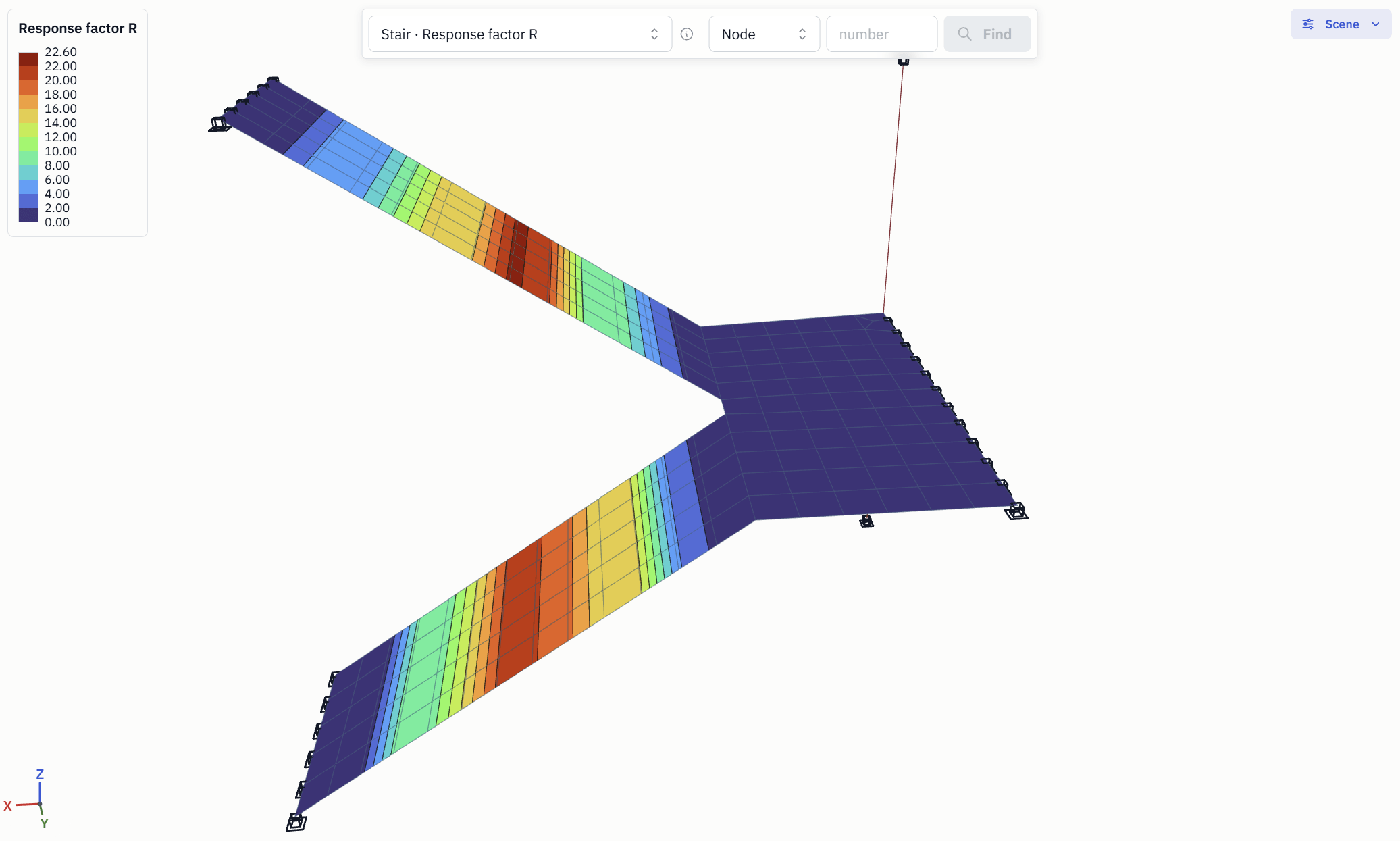
Concrete and steel stairs are solved with their own models, and the walking response is assessed by the SCI P354 or AISC DG11 method.
Facade condition
The condition the guide recommends for the building's perimeter can be applied as an option. Under AISC DG11 the moment of inertia of perimeter beams is increased by the factor the guide gives. Under SCI P354 or CCIP-016 the guide's translations are restrained at the perimeter nodes.
Partitions
Partitions enter the model as mass, by their weight and where they stand. The stiffness of permanent full-height partitions can also be taken into account as an option.
Report and publish
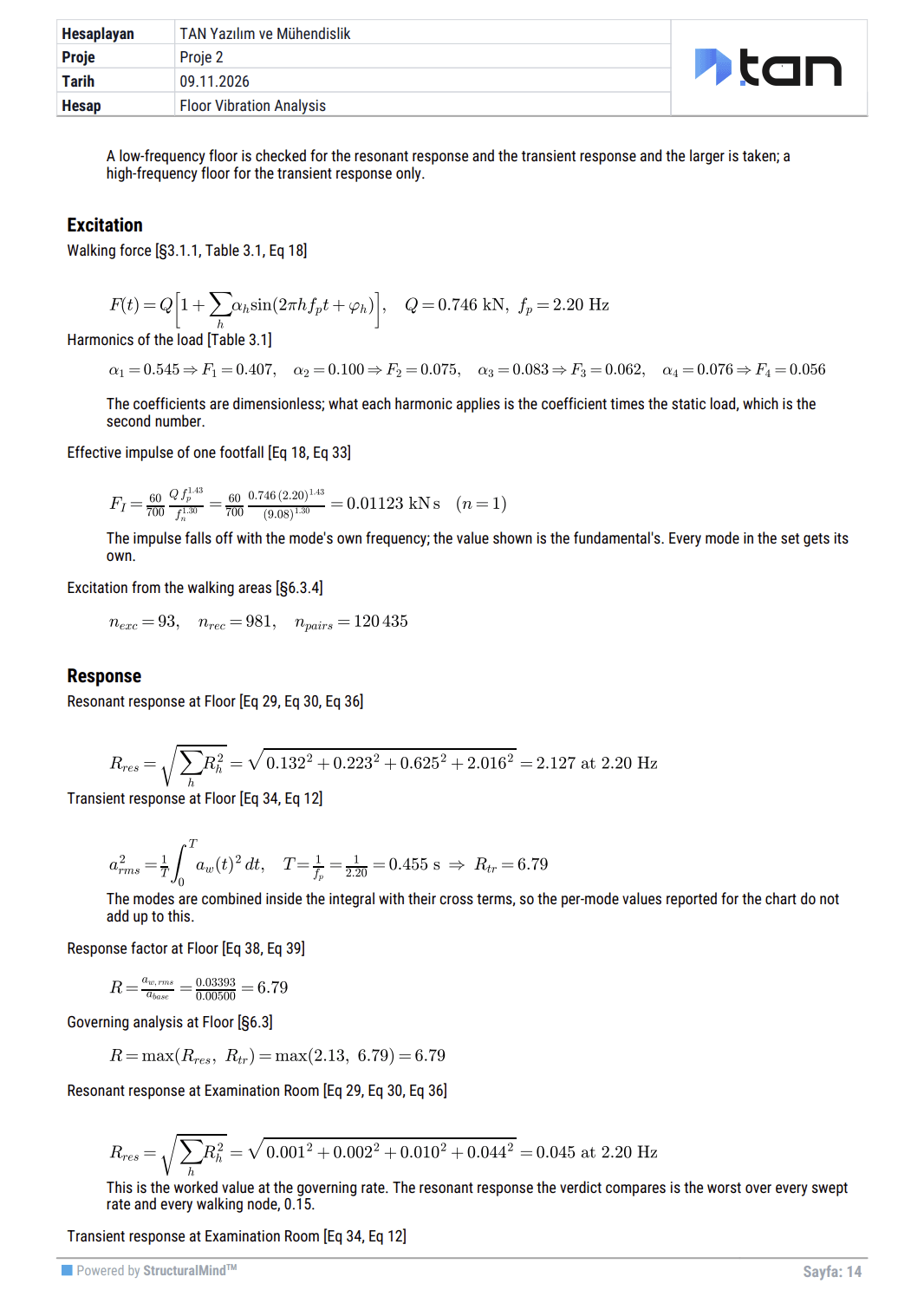
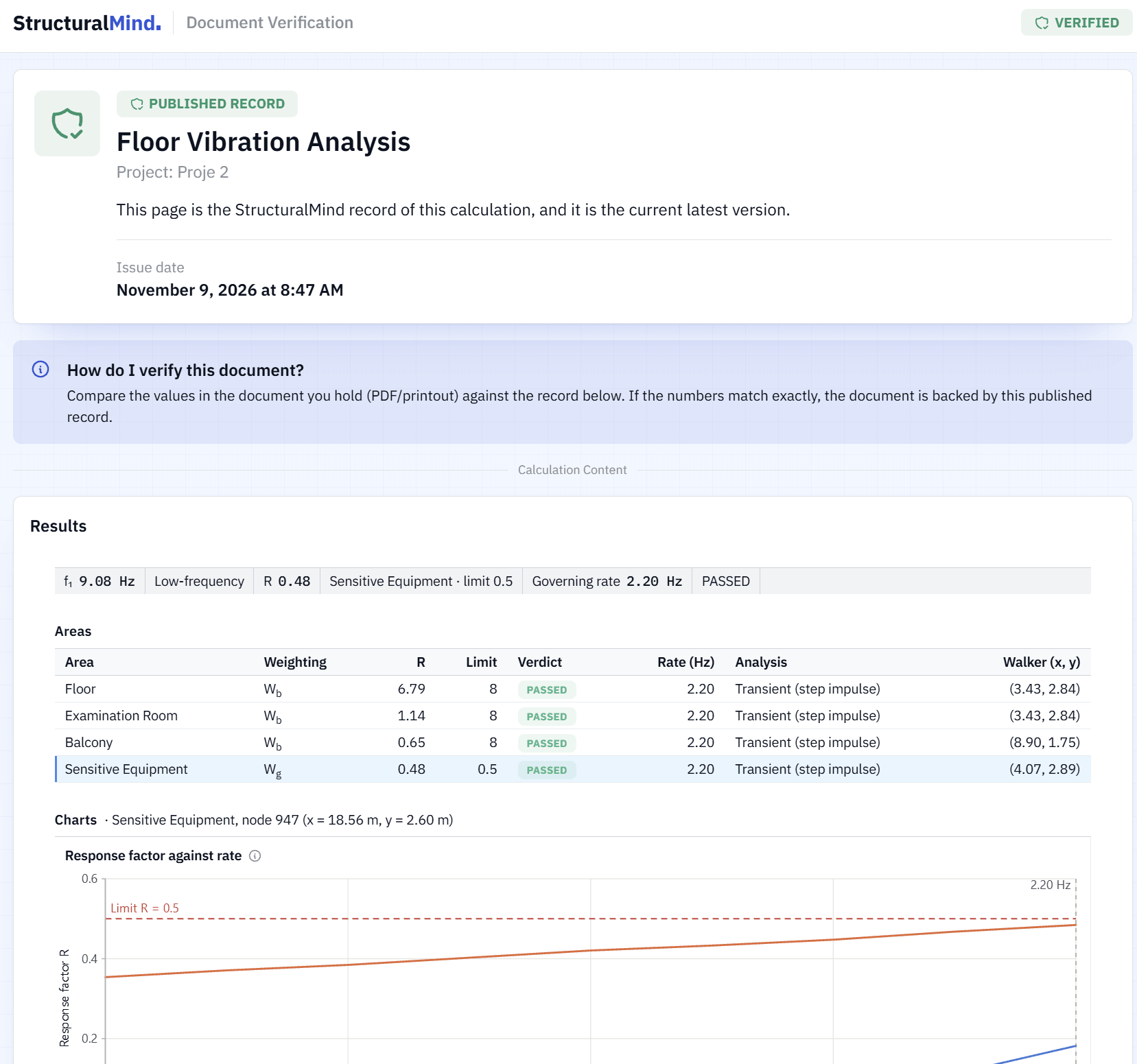
Generate a PDF report with the calculation steps. Publish the calculation as an immutable copy and share a verification link.
Questions
- Which guides are used?
- SCI P354 (2009), CCIP-016 (2006) and AISC Design Guide 11 (2nd edition, 2016). The guide is chosen per calculation.
- What quantity is the result assessed in?
- SCI P354 and CCIP-016 express the result as the response factor R, and AISC DG11 as peak acceleration in percent of gravity. AISC DG11 uses one-third-octave band velocity for sensitive equipment areas. Machine vibration is computed by the same method under all three guides.
- Have the vibration analysis results been verified?
- Yes. The calculation is tested against the worked examples of the three guides. The floor response is compared with an ETABS time-history solution, and the stair response with SAP2000 solutions. The results are on the verification page.
- Is Floor Vibration Analysis free?
- Floor Vibration Analysis is a premium calculation included in the Engineer plan. You can try it free for 30 days.
Start calculating in minutes.
Sign up, pick a calculation, and produce your first auditable report.